What to Expect When Installing Composite Driveway Gates
More households across the UK are turning to composite driveway gates as a smart upgrade to their properties. Whether it’s for added privacy, security, or simply a more stylish entrance, composite gates are fast becoming a favourite. At Cheshire Composite Gates, we’ve seen growing interest in these long-lasting, low-maintenance alternatives to traditional wood and metal gates.
If you’ve been thinking about installing composite driveway gates, this guide will walk you through everything you can expect: the planning stages, installation process, options for automation, and what life is like post-install.
Why Homeowners Are Choosing Composite Driveway Gates
The appeal of composite driveway gates lies in their impressive range of benefits. Firstly, they require hardly any upkeep. Unlike wooden gates that need regular sanding and staining, or metal gates that can rust and need repainting, composite materials do not rot, warp, or corrode. They hold their colour and shape year after year, making them ideal for the UK’s changing weather.
Composite gates are made using recycled plastics and wood fibres that are pressed and moulded into shape. This not only makes them very strong but also an environmentally friendly option for eco-conscious households.
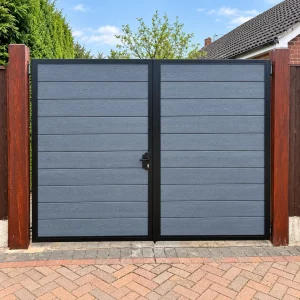
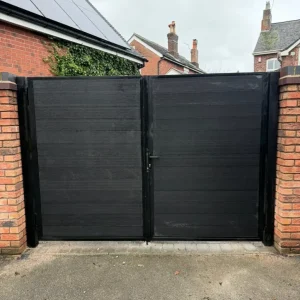
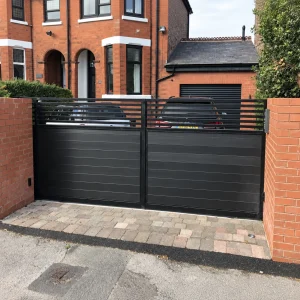
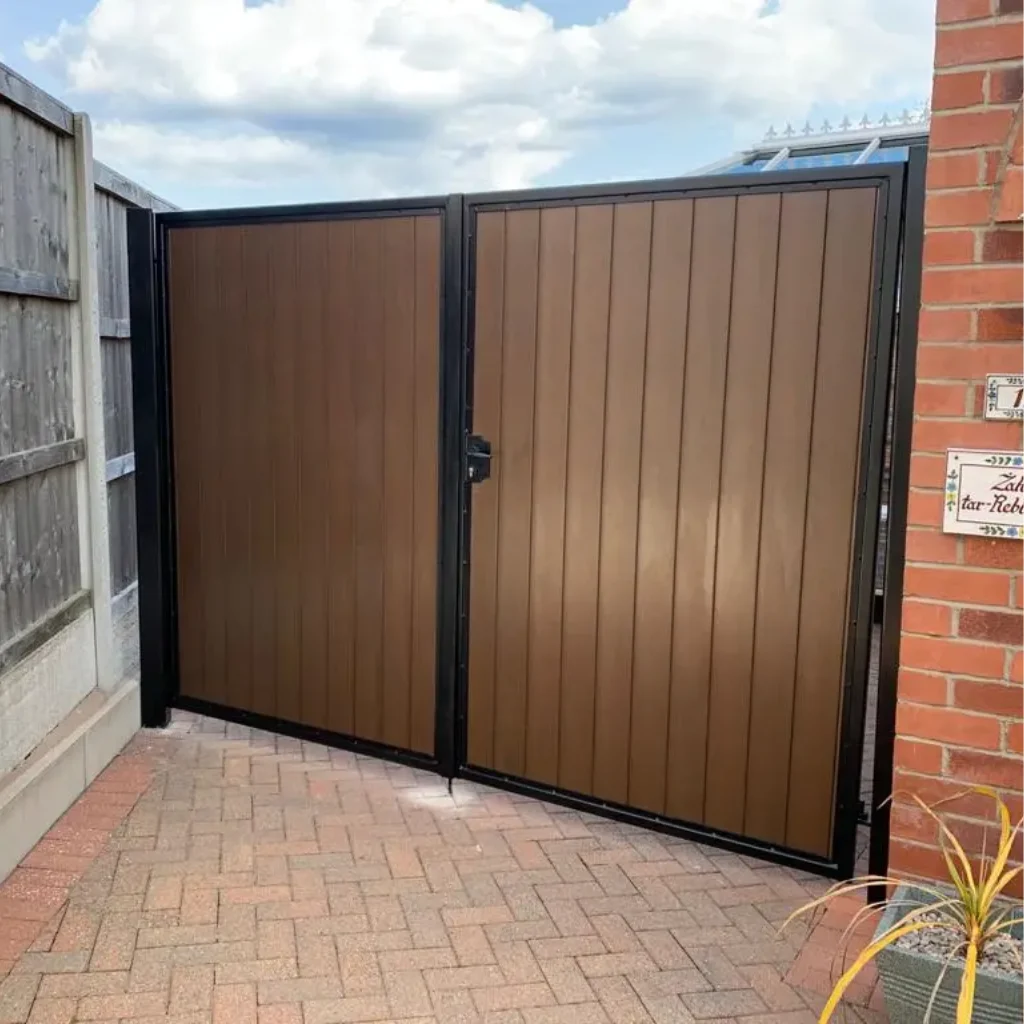
They also improve the look of a home’s front by adding a polished and neat finish. Available in colours like anthracite grey, brown, black, or wood-effect finishes, composite gates can match any home design from modern builds to more traditional properties. Whether you’re interested in something tall for privacy or a shorter gate for added charm, you can find a version to suit your needs.
If you’d like the option for matching fencing, take a look at our range of composite fencing and fence panels to complete the look.
Planning Your Composite Driveway Gates Installation
Before we begin the installation, a bit of helpful planning ensures everything runs smoothly.
Measurements and Style Choices
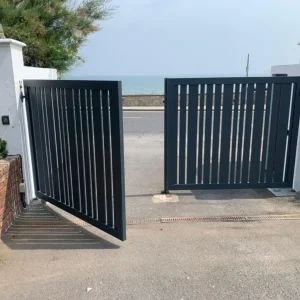
Start by measuring the width of your driveway. Is access needed for multiple vehicles? Will your gate swing open or slide to the side? Sliding composite gates work well when space behind the entrance is limited, while swinging gates need room to open fully.
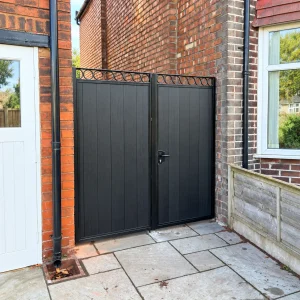
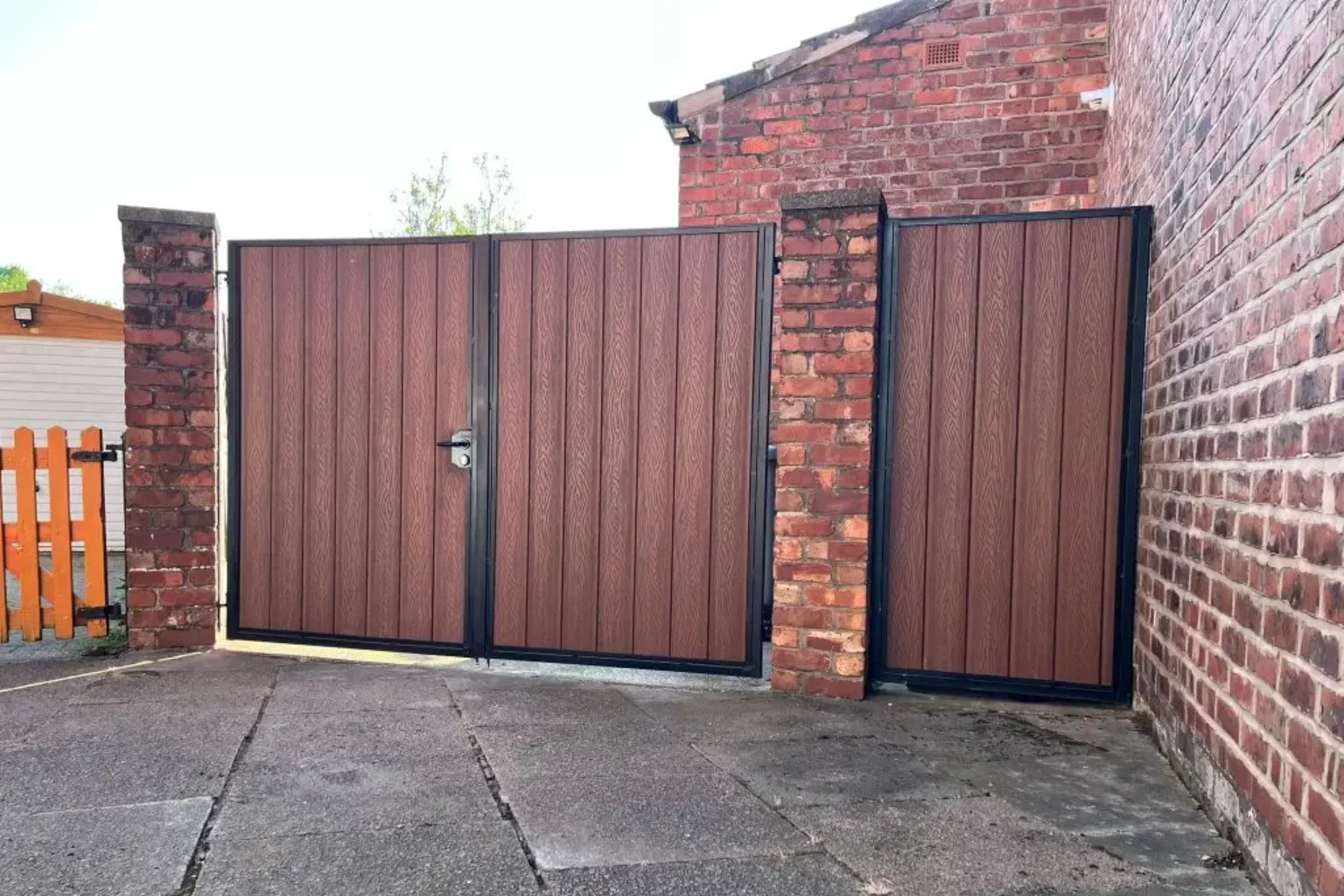
Deciding on a single or double gate is the next step. Single composite gates are great for smaller driveways, while double composite gates offer grander access and suit wider driveways.
Think about security, too. Do you want a lockable gate? Would you prefer one that automatically opens with a remote?
Choosing a Design
There are plenty of ways to make your gate your own. With various finishes, slat layouts, and frame types available, you can customise it to match your fencing, garden path, or house exterior.
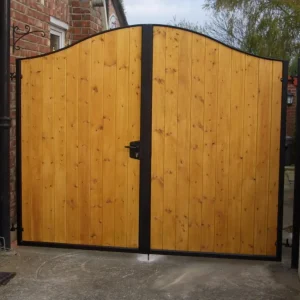
For homes that mix materials such as steel or timber, our range of steel timber gates may also offer an appealing choice. Or, for a sleeker look, you may wish to explore our range of aluminium gates, which can pair neatly with composite panels.
The Process of Installing Composite Driveway Gates
Once you’re set on the gate’s size, style, and configuration, installation begins. Let us walk you through what usually happens at each stage.
Site Survey and Groundwork
An installer will visit your home to check the space for the gate. They’ll assess whether the ground is level, whether you have existing brick piers or plan to add new posts, and if there’s enough room for opening and closing properly. Accurate measurements at this step prevent future issues.
If the terrain is uneven, it may need levelling. Post holes might be dug and set with concrete to support the frame securely. Sometimes, older brick pillars may be removed or reinforced to support the new gates.
Mounting the Gate
The gate frame is attached to either fixed posts or to walls or pillars. At this point, everything needs to be level and aligned properly. This ensures the gates swing or slide effortlessly.
Choose between manual operation and our automated gate installation options. Either way, we typically complete installation in one to two days, though automation may add a little extra time.
Automation and Power Set-Up
Automated gates are a great choice if you’d like to open your gates by remote, sensor, keypad, or phone. For automated gate installation, we’ll set up the motors, safety stops, remotes, and power source.
Mains electricity is the most common source, but solar-powered units are an option if you’re remote from your home’s power supply.
After Installation: Function, Appearance and Care
Once your gate is fitted, it will be tested thoroughly. This includes checking that it swings or slides smoothly, that the locks or motors work as expected, and that everything sits level and secure in its place.
How to Look After Your Composite Driveway Gates
One of the great things about composite driveway gates is how easy they are to care for. There’s no need for painting, oiling, or staining. A light hose-down or a wipe with soapy water every few months is usually enough to keep them looking fresh.
We suggest checking hinges, bolts, or electric components once a year. These small checks can help your gates last well over a decade.
Warranty and Support
Most gates come with a manufacturer’s warranty, which gives peace of mind should anything unexpected happen. With Cheshire Composite Gates, we also offer aftercare guidance, and our support team is on hand if you get stuck using your automation system.
Answering Common Questions About Composite Gates
Are Composite Gates Durable in UK Weather?
Yes. Composite panels are made to withstand rain, ice, sun, and wind without swelling, cracking, or fading. That’s a major reason why many families are replacing traditional timber gates with composites.
What Security Features Are Available?
We provide high-strength locks and frames, and we can connect your gate to intercoms or keypad systems. For homes that need extra peace of mind, automated gate installation offers controls that make it easy to manage who enters or leaves.
How Long Does Installation Take?
In most cases, manual gate setups take 1 to 2 days. If we’re adding groundworks or automation, you’ll want to allow 2 to 4 days, depending on the site. Weather and complexity of the gate can also play a part, but we’ll always keep you informed.
If you have more specific questions about your project, just get in touch via our contact page, and one of our friendly team members will be happy to help.
Making the Right Choice for Your Home
Composite driveway gates are a reliable, low-maintenance option that adds a stylish, secure feel to any home. Whether you value privacy, want better entrance control, or just want something that stands the test of time, they deliver both function and enduring good looks.
Every install is different, and getting expert advice early on makes a big difference. At Cheshire Composite Gates, we help customers from start to finish with expert surveys, honest advice, and high-quality materials that work.
If you’re ready to take the next step, contact our team and let Cheshire Composite Gates help you plan the perfect gate for your home.
Thinking about new composite driveway gates or an automated gate installation? Let us help you make a confident, stress-free choice with expert guidance and craftsmanship that lasts. Contact our team today and bring lasting style and function to your driveway.